
Perfecting AP: Visibility, Control and the Changing Role of the GPO
How would your organization look if it achieved 90% touchless processing and 50%+ STP?
For many GPOs, the unfortunate answer to that question is: “I don’t know”. Traditional automation rarely delivers results anywhere near those numbers. And finding an answer in the first place requires on-demand visibility into core P2P processes, something most teams simply don’t have.
But for today’s GPOs, operating without that visibility is no longer sustainable. As cost pressures mount, organizational priorities are shifting decisively towards measurable performance and tangible results. And the pressure to prove strategic value has never been higher.
In our recent webinar, in partnership with SSON, we unpacked the role of end-to-end AP visibility in this high-pressure climate – and how leading GPOs are using AI-powered automation to achieve it.
Here’s a quick summary:
- Limited visibility means widespread issues
- Changing the “GBS narrative” takes collaboration between teams
- GPOs should prioritize a platform approach to automation and data access
- Success is the result of continuous improvements, not single-point solutions
Limited visibility means widespread issues
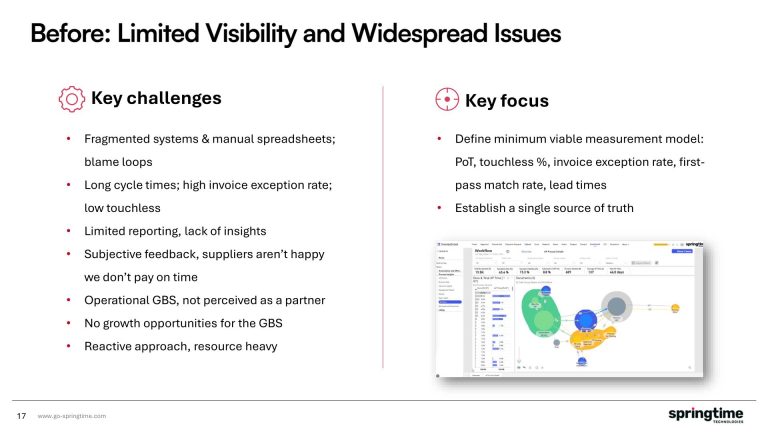
For AP teams and GBS leaders, there are several predictable results from fragmented automation systems that give limited process visibility:
- High cycle times and exception rates
- Lack of insight into where processes are going off the rails
- Resource-intensive, reactive problem-solving
- Strained supplier relationships from delayed payments
But there are bigger picture issues as well. When processes fail without a clear explanation as to why, GPOs risk losing credibility. Their teams get stuck in the role of the organization’s “operational backbone”. And the entire function is treated as a cost, rather than a strategic asset.
Key takeaway: Fragmented and reactive data access is the enemy of visibility. To combat it, teams must establish a single point of truth, clear-cut guidelines around how process insights will be accessed, and an SLA for receiving process updates (ideally as continuous data).
Changing the narrative is a collaborative effort
The insights gained from data access enable more than just improving process steps within an operational area, like AP. They also provide visibility into the upstream causes of challenges, quantifying how process steps in teams like procurement affect outcomes in downstream teams, like AP. That information can help GPOs to identify the root causes of issues like 3-way match failures and late payments.
This is a crucial factor for securing buy-in for change across teams. Timely data access allows GPOs to storyboard ongoing challenges and their business impacts. And that in turn makes it easier to make the business case for why each team should be invested in downstream process outcomes.
The more you create a story and are able to build that story on factual data, whether it’s about the quality of the purchase order or receiving invoices already dead on arrival, the more you can bring other teams on board, taking a deep dive into those key metrics, those key failures. And, in the process, creating the close collaboration between GBS, finance, procurement, and other teams that really drives business value.
Aleksander Hajdas, Former Global Process Owner, Procure to Pay, JTI

Key takeaway: P2P process issues aren’t “only an AP problem”. But to address issues originating upstream, GPOs must have the data visibility and visualization tools to build a compelling narrative that quantifies causes and business impacts.
A unified platform drives results
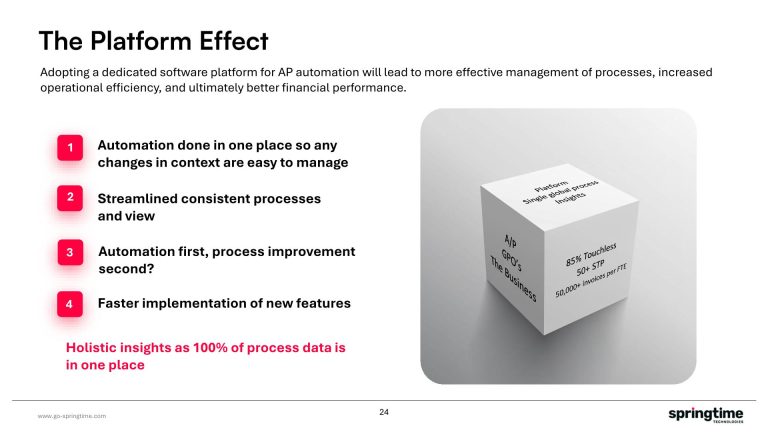
To improve process outcomes and meet business objectives, teams also need a holistic, end-to-end view of processes like AP. Savvy GPOs are turning to dedicated process platforms to provide that view, benefitting from:
- Complete oversight of data in a centralized repository
- Centralized automation that simplifies changes in processes or context
- Rapid implementation of new automation and features, based on identified process hurdles
- Visibility into upstream components that affect process outcomes and efficiency
Using AI-driven platforms like Invoicetrack, for example, teams gain granular visibility into the specific causes of process bottlenecks (like the document types teams spend most time on) and the causes of late payments. They can also view data at the level of the overarching process: from the number of documents processed per FTE to regional performance and process areas that represent the highest risk of failure.
Key takeaway: To gain much-needed visibility, GPOs must invest in software that centralizes their data and automation. This “platform effect” is a key component for realizing both the reimagined GPO role and a unified process landscape. One where process teams are fully empowered to deliver on the goals of greater operational efficiency, reduced costs, and increased financial accountability.
Success is cumulative, never a "one and done"
- 6-9K invoices per FTE in year one (initial implementation of platform solution)
- 40-45K invoices per FTE by year three (ongoing improvements based on data insights)
"Measurement is crucial. If you’re not measuring the changes and the trends, you don’t know whether you’re improving. Nearly all of us in Shared Services need to achieve 5% efficiency improvements every year while still trying to grow the organization. And I think the innovation that's come with AI and the platform approach over the last five years is making a profound difference in helping teams to meet that target."
Steve Standring, Fractional CRO at Springtime

Key takeaway: Platform-wide insights give GPOs the tools they need to foster a culture of continuous improvement. Using these tools, process teams should set clear-cut goals for performance and productivity improvement year-on-year.
From operations to strategic impact
Summing up: To move past the traditional view of “back-office” processing as a necessary but purely operational cost center, GPOs must shift both their approach to automation and their approach to the role. This includes recognizing the need for:
- Greater visibility into process data
- A centralized platform for managing processes and automation
- Continuous insights and data-driven improvement
- A culture of collaboration across the full process pillar

Are you left wondering what end-to-end visibility could look like for your organization? Springtime Technologies is a leader in AI-driven automation for the AP sector, serving enterprise-level clients across the globe. Let’s talk.